Teeth Whitening Services
From the first assessment through to the aftercare that protects your result — a complete account of how the Teeth Whitening service works, what it addresses, and where its limits lie.
What the Teeth Whitening Service Covers
Teeth Whitening is often described as a single procedure, but in practice it is a short sequence of connected stages: an assessment that establishes whether whitening is appropriate, a controlled session in which the whitening gel does its work, and a period of aftercare that determines how long the result actually holds. Treating those three stages as one service, rather than as a product handed over at a counter, is what separates a predictable outcome from a hopeful one. Everything described on this page is built around that idea.
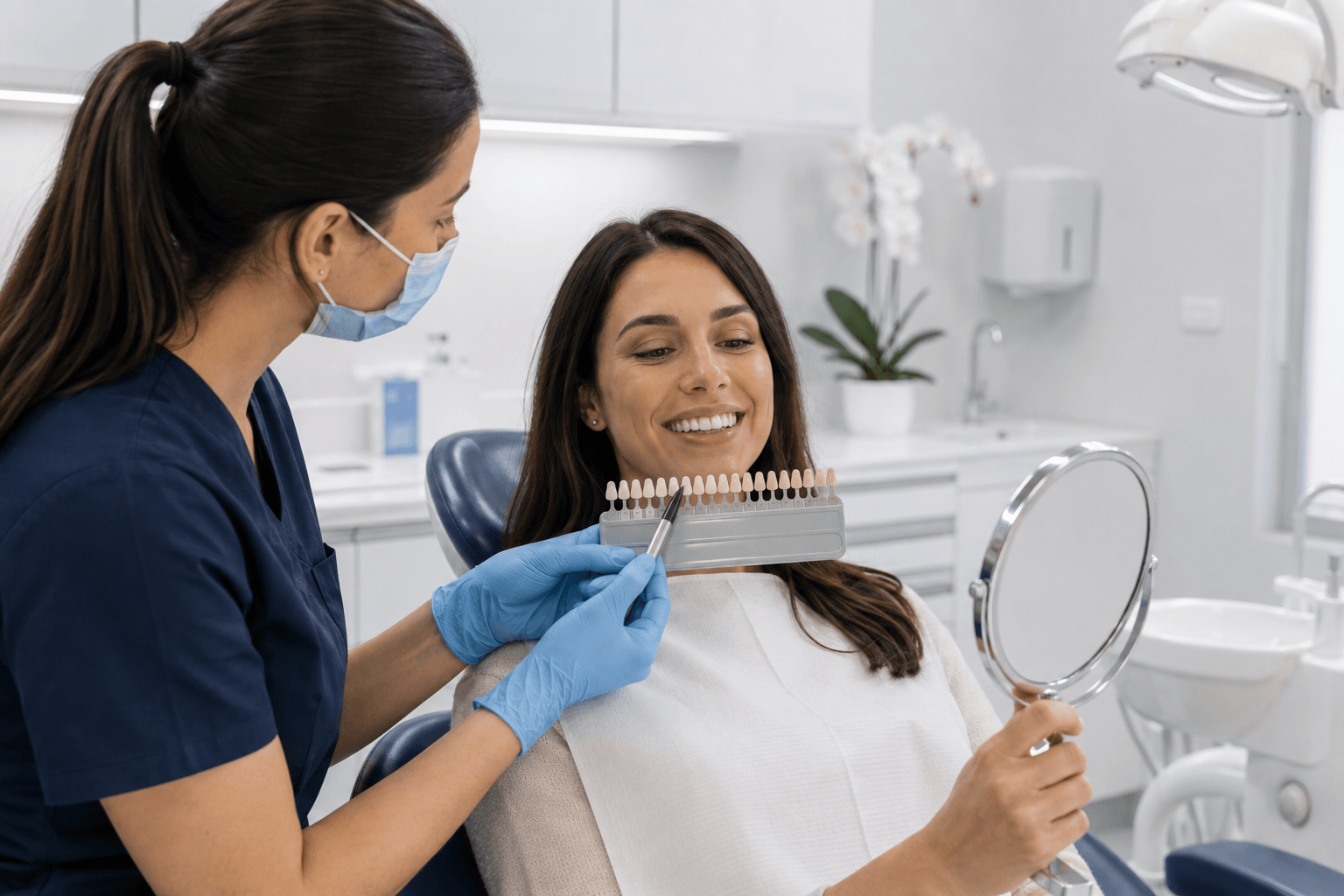
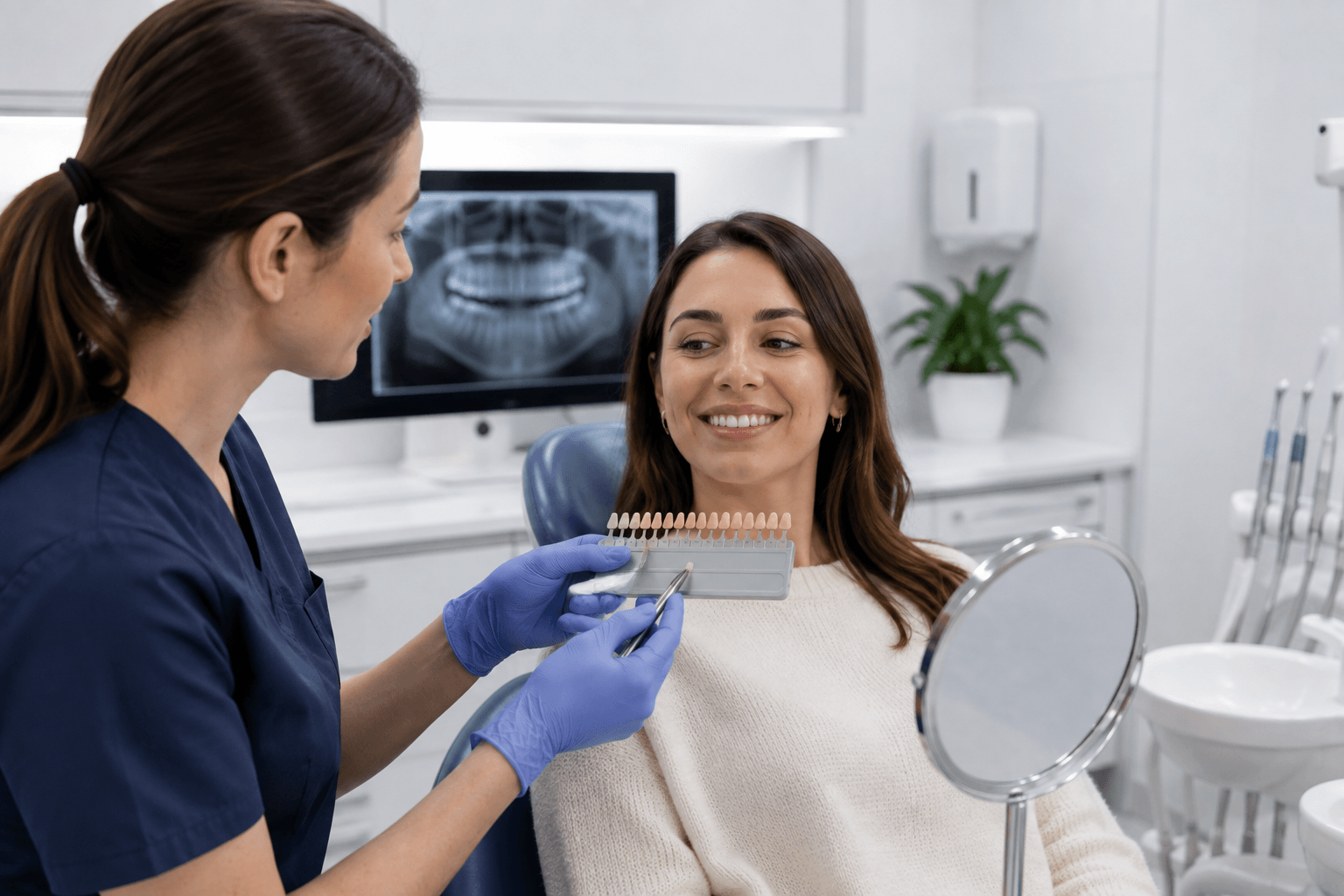
The service begins with a conversation rather than a gel. Before anything is applied, the current shade of the teeth is recorded, the pattern of discolouration is examined, and any existing dental work is identified. This matters because enamel and restorative materials behave very differently. Natural enamel responds to whitening agents; crowns, veneers, and tooth-coloured fillings do not. A person who begins Teeth Whitening without knowing which surfaces in their smile are natural and which are restored has no way of predicting what the finished result will look like. Establishing that map first is not a formality — it is the single most useful thing that happens during the whole process.
From there, the appointment itself is designed to be straightforward. A typical Teeth Whitening session runs for around an hour. There are no trays to take home and remember to wear, no daily routine to maintain for weeks, and no waiting to find out whether anything has changed. The shade is checked before the session begins and again once it ends, so the difference is measured rather than guessed at. For people who have tried strips or pens and been unsure whether they achieved anything at all, that measurable comparison is frequently the most reassuring part of the experience.
What Teeth Whitening realistically addresses is the accumulated staining that everyday life deposits on enamel. Tea, coffee, red wine, dark fizzy drinks, richly coloured sauces, and tobacco all leave pigment behind, and enamel is faintly porous enough to hold it. Whitening agents break down those trapped compounds, lifting the stain rather than scraping the tooth — which is why the process brightens a smile without altering the shape or structure of any tooth.
There are limits, and this service is explicit about them. Discolouration that originates inside the tooth — from ageing, from certain medications taken while teeth were forming, from an old injury, or from excess fluoride during development — sits beneath the enamel rather than within it. Those intrinsic stains may lighten somewhat, but they rarely respond as completely as surface staining does. Where that is the likely picture, it is far better to say so during the assessment than to discover it afterwards. An honest forecast at the start protects both the result and the relationship.
The Pre-Treatment Consultation
Every Teeth Whitening appointment opens with an assessment. It is short, but it does a considerable amount of work, and it is the stage that most determines whether the outcome will meet expectations.
Understanding the cause of the discolouration
The first question is why the teeth look the way they do. Discolouration that has built up gradually over years of tea and coffee behaves very differently from a single dark tooth following an old knock, and the two require entirely different conversations. Surface staining generally lifts well. Localised intrinsic discolouration frequently does not lift evenly, and whitening the surrounding teeth can occasionally make a single darker tooth more noticeable rather than less. Knowing which situation is in front of you changes the advice given.
Mapping existing dental work
Crowns, veneers, bridges, and composite fillings hold whatever shade they were made in. They will not lighten, and no amount of additional treatment will change that. If those restorations sit in the visible part of the smile, whitening the natural teeth around them will increase the contrast between the two. For some people that is entirely acceptable; for others it is a reason to plan differently, perhaps whitening first and then discussing replacement of a restoration with their dentist so the shades match. Either way, this is a decision to make deliberately in advance, not to encounter as a surprise in the mirror.
Checking oral health first
Teeth Whitening is a cosmetic treatment applied to healthy teeth and gums. It is not a treatment for decay, gum disease, cracked enamel, or an exposed root surface, and applying it over any of those makes discomfort considerably more likely. Where something needs attention, the appropriate step is to see a dentist first and return afterwards. Postponing whitening for a few weeks is a minor inconvenience; whitening over an untreated problem is not.
Discussing sensitivity history
Anyone who has previously experienced sharp sensitivity — whether from an earlier whitening attempt, from cold drinks, or from a particular tooth — should say so at this point. That history genuinely changes how a session is planned. Contact time can be shortened, the number of applications reduced, and desensitising preparation used beforehand. Sensitivity is far easier to prevent than to settle once it has started.
Recording the starting shade
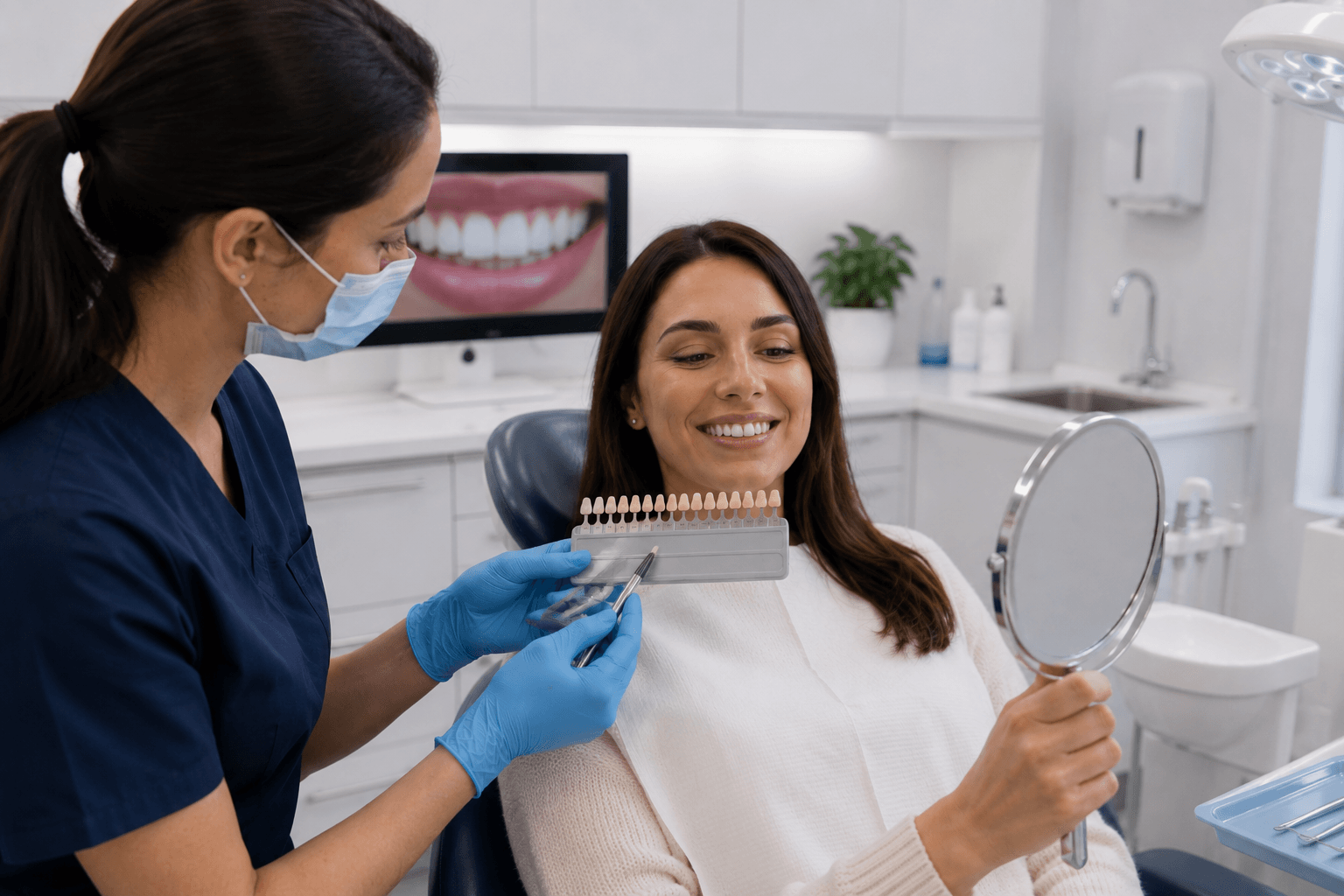
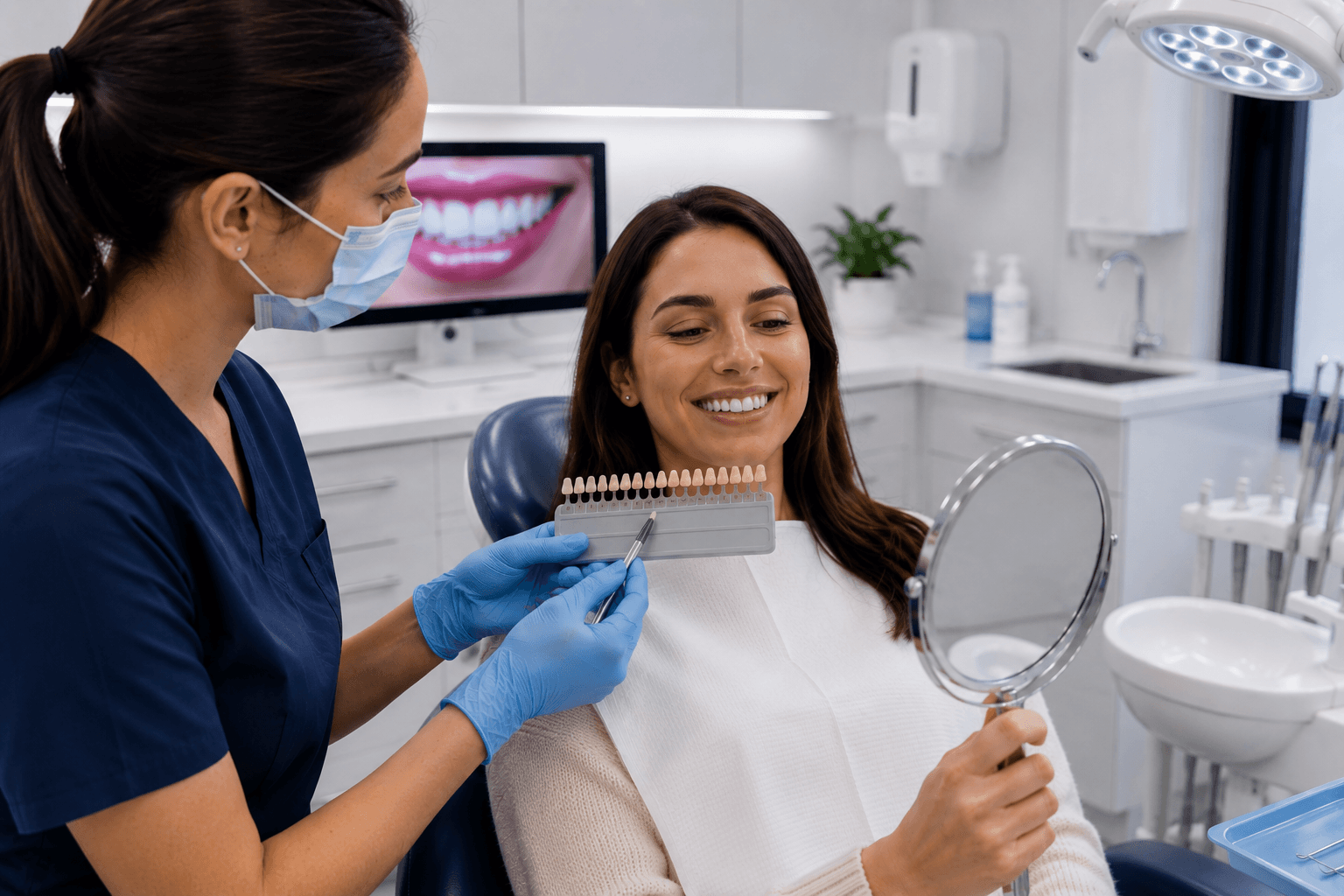
The existing shade is matched against a standard shade guide and written down before anything begins. This provides an objective reference point. Human memory for colour is unreliable, and after an hour of looking at your own teeth under a treatment light your sense of the original shade is not to be trusted. A recorded baseline turns a subjective impression into something that can actually be compared.
Setting realistic expectations
The consultation ends with a plain statement of what is likely, not what is possible in the best imaginable case. Where a substantial change is achievable, that is said. Where the realistic outcome is more modest, that is said too. Nobody has ever been disappointed by a result that exceeded a carefully stated expectation, and a great many people have been disappointed by one that fell short of an inflated promise.
People who want to compare the wider reasons for choosing a particular whitening provider can also review https://watford.ultimawhite.co.uk/choose-us/, which provides additional information about the service approach.
What to bring to the assessment
It helps to arrive knowing roughly when any crowns, veneers, or front fillings were placed, whether you have had whitening before and how your teeth reacted, and whether you are currently under the care of a dentist for anything. None of it needs to be precise. Even approximate answers make the assessment more useful.
Inside a Teeth Whitening Appointment
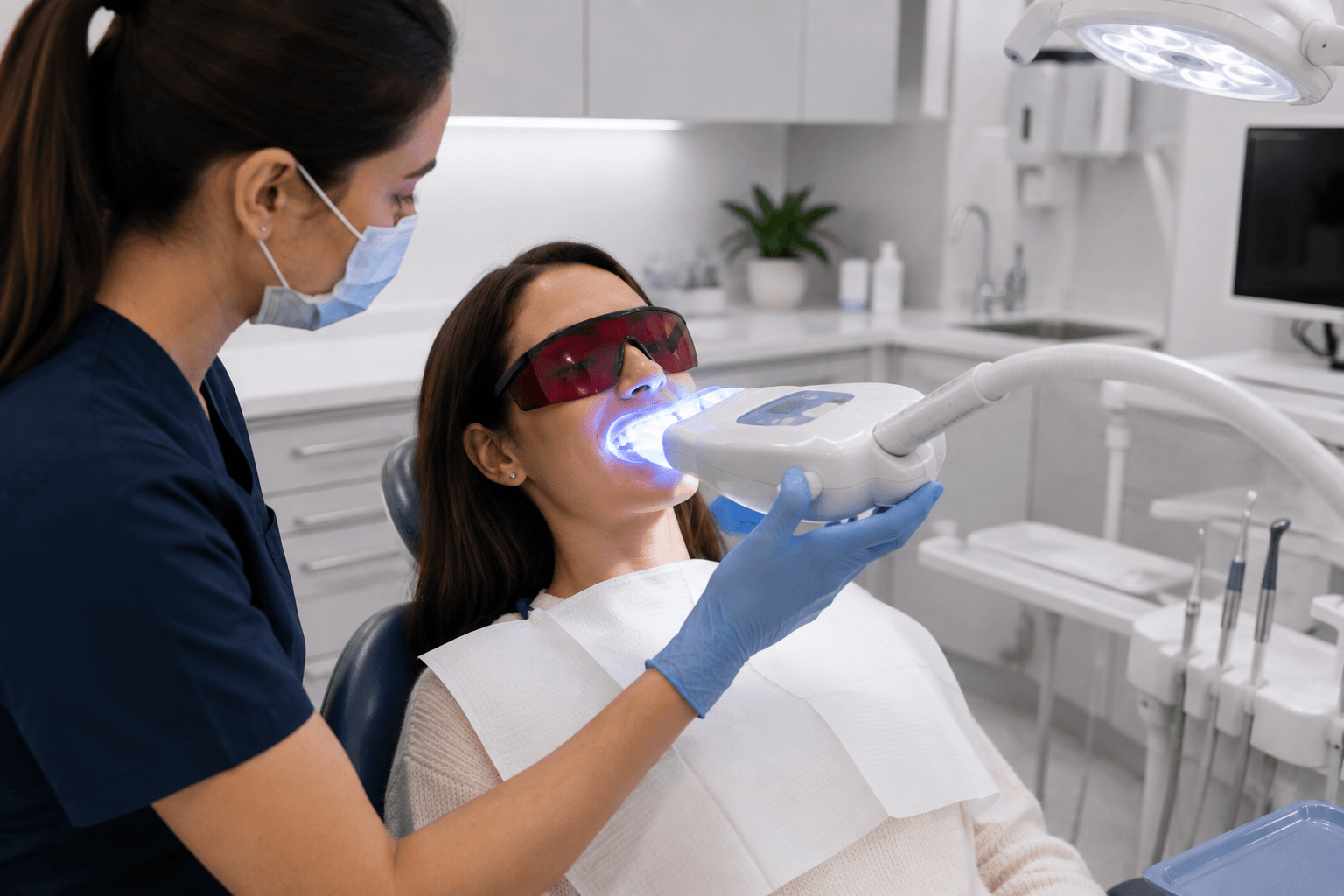
The session itself is deliberately unremarkable. You sit, the treatment is applied in monitored stages, and you leave about an hour later. There is nothing to operate, nothing to time yourself, and nothing to judge by eye. The sequence below describes what actually happens from arrival to departure.
Shade Record and Final Checks
The starting shade is matched and recorded, and the mouth is given a last look over before anything is applied. This is the point at which a session would be paused if something unexpected appeared — a sore area of gum, a chip that had not been mentioned, a tooth that has become sensitive since the assessment. Stopping here costs one appointment. Continuing regardless can cost a great deal more comfort.
Cleaning the Surfaces
Whitening gel needs to reach the enamel to do anything at all. Where plaque or a film of surface deposit is sitting on the teeth, the gel acts on that instead, producing a patchy and disappointing result. The tooth surfaces are therefore cleaned and dried before application. Where there is significant hardened build-up, a professional scale and polish with a dentist or hygienist beforehand will meaningfully improve the outcome.
Protecting the Soft Tissue
Lips and cheeks are held clear with a retractor, and the gum line is protected with a barrier so the gel stays on the enamel where it belongs. Most of the discomfort people associate with Teeth Whitening comes from gel contacting gum tissue rather than from the teeth themselves. Careful isolation at this stage prevents the majority of it, and it is the reason a supervised session tends to be more comfortable than a self-applied kit.
Applying the Gel
A measured quantity of whitening gel is applied in an even layer across the visible surfaces. Evenness is what produces a uniform result; unevenness is what produces streaks and patches, and it is the most common failing of unsupervised at-home application, where the wearer cannot see what they are doing. Coverage is checked visually before the first activation cycle begins.
Activation Cycles
The gel is activated for a set period, then removed and reapplied. A session normally runs through several such cycles within the hour. Working in cycles rather than one long application allows the response to be checked between rounds, so contact time can be shortened if the teeth are lightening quickly or if any early sensitivity appears. It is a series of small, reversible decisions rather than one irreversible commitment.
Monitoring Throughout
Between cycles the teeth and gums are checked, and you are asked directly how things feel. Speak up if anything is uncomfortable. A twinge that is mentioned can be managed immediately by shortening the next cycle or stopping early; a twinge that is endured silently cannot. Nothing about the process requires you to sit through discomfort in order to get a result.
Rinsing and Recording
The final application is removed, the mouth is rinsed thoroughly, and the barrier and retractor come out. The new shade is matched against the same guide used at the start and recorded alongside the original. That before-and-after pairing is the honest measure of what the session achieved, taken under the same light with the same reference.
Aftercare Briefing
Before you leave, the aftercare period is explained: what to avoid, for how long, and what to do if any sensitivity appears overnight. The first forty-eight hours carry disproportionate weight, and a short conversation at this point protects the result far more effectively than anything applied during the session itself.
How long does it take?
Allow around an hour for the treatment, plus a little time either side for the assessment and the aftercare briefing. The exact duration varies with the number of activation cycles used, and a session may be shortened if the teeth reach a good result early or if sensitivity suggests stopping. Time in the chair is not itself the goal.
Teeth Whitening at Home
A home visit is the same Teeth Whitening treatment delivered in your own home rather than at a premises. The equipment is portable, the sequence is identical, and the assessment, protection, monitoring, and aftercare briefing all happen exactly as described above. What changes is only the location. People looking for a locally available whitening service can also explore Ultimawhite Lowestoft to understand how professional Teeth Whitening services are provided in that area.
This suits several situations well. It removes the need to take time off work or arrange travel, which matters when the treatment itself only takes an hour but a round trip could take two more. It works for people with limited mobility, for parents who cannot easily leave the house, and for anyone whose schedule makes a fixed daytime appointment at a fixed address genuinely difficult. It also removes a barrier for those who find clinical settings uncomfortable — being in your own front room measurably lowers the anxiety some people feel about any dental-adjacent procedure.
Two people can be treated in the same visit. Because the appointments run consecutively and there is only one journey involved, a shared booking costs less per person than two separate ones. This is a common arrangement before weddings, family occasions, and holidays, where two people in the same household want the treatment at the same time.
What a home visit needs from you
- A chair or seat where you can recline comfortably for around an hour, with room to work around you.
- A power socket within reach of that seat.
- Access to a sink for rinsing at the end of the session.
- Reasonable light, and a room where you will not be interrupted for the duration.
That is genuinely the full list. Nothing needs to be bought, prepared, or cleared in advance beyond the seat itself.
What stays the same
Every clinical element of the service is unchanged by the setting. The pre-treatment assessment happens on arrival, the shade is recorded before and after, soft tissue is protected in the same way, the session is monitored in cycles, and the same aftercare guidance is given. A home visit is a change of venue, not a reduced version of the treatment, and anywhere that treats it as a lighter or quicker alternative is not offering the same thing.
Twelve Reasons People Choose This Approach
Most people considering Teeth Whitening arrive with the same three questions, usually unspoken: will it hurt, is it safe, and will it actually do anything. The twelve points below are an attempt to answer those questions honestly rather than enthusiastically, including where the honest answer carries a qualification.
The Result Is Visible the Same Day
There is no waiting period and no build-up phase. The shade is recorded before the session and again at the end, and the difference between those two readings is the result. For anyone who has spent weeks with strips wondering whether anything is happening, the appeal of a measured same-day comparison is considerable.
A Gentler Active Formulation
Peroxide-free whitening systems are formulated to lift staining without the harshness that some people associate with traditional bleaching agents, and they are frequently chosen by those who have reacted badly to peroxide-based products in the past or who have simply avoided whitening for that reason.
Sensitivity Is Actively Managed
The sharp, sudden twinges that people describe as “zingers” are the single most common complaint about whitening. Most people report no such sensation during a supervised session, and where sensitivity does appear it is usually mild and settles within a day or two.
The reason is structural rather than lucky. Contact time is controlled, gum tissue is kept isolated, the response is checked between cycles, and a session can be shortened at any point. Sensitivity is a variable being managed, not an outcome being hoped for.
Enamel Is Not Scraped or Reshaped
Whitening breaks down the pigment held within the surface of the enamel. It does not remove enamel, thin it, or alter the shape of any tooth. Nothing about the process is abrasive, and no tooth structure is lost.
Enamel does become temporarily more porous immediately afterwards, which is why the aftercare window exists and why it matters. That is a short-term, reversible state — not damage — and it resolves as the enamel rehydrates over the following days.
Applied by Someone Who Can See What They Are Doing
The central weakness of any at-home kit is that the person applying it cannot see the surfaces they are covering. Coverage ends up uneven, gel migrates onto the gums, and the result is patchy in ways that are obvious to everyone except the person who applied it.
Having the application handled by a trained operator removes that problem entirely. Coverage is checked visually, the response is monitored between cycles, and the whole thing requires no judgement calls from you at all.
The Confidence Effect Is Real
People consistently report the same small behavioural shifts afterwards: smiling without checking themselves first, not covering their mouth in photographs, not thinking about their teeth mid-conversation. These are modest changes and they are difficult to quantify, but they are what most people actually came for.
It Targets Everyday Staining Specifically
Coffee, tea, red wine, dark fizzy drinks, richly coloured sauces, tobacco, and simple time all deposit pigment into the enamel surface. This kind of accumulated extrinsic staining is precisely what Teeth Whitening is designed to lift, and it is where results are most reliable.
The distinction matters. Staining that has built up on the outside responds well. Discolouration originating inside the tooth is a different problem with a different answer, and it is identified at the assessment rather than discovered afterwards.
Nothing to Manage Afterwards
There are no trays to wear overnight, no gel to reorder, no schedule to keep to, and nothing to remember for a fortnight. You attend one appointment, and the active part of the treatment is finished when you leave.
It Fits Around a Fixed Date
Weddings, holidays, interviews, graduations, and milestone birthdays are the most common reasons people book. A single appointment is straightforward to place in a schedule that is already busy.
Results Hold With Ordinary Care
Brushing twice daily, cleaning between the teeth, and being moderately mindful about heavily staining drinks will keep a result looking good for a considerable time. No specialist products or unusual routine are required.
Longevity varies genuinely between people, and lifestyle is the largest factor by some distance. A heavy coffee drinker who smokes will see staining return sooner than someone who does neither, and no treatment changes that. A top-up session is straightforward whenever it is wanted.
Suitable for Most Healthy Mouths
You do not need to be an ideal candidate to benefit. Teeth that look generally dull, yellowed, or evenly stained tend to respond well, which describes a great many people who assume they are somehow unsuitable.
“Most” is not “all”, and the exceptions are real: untreated decay or gum disease, extensive front restorations, developing teeth in younger patients, pregnancy and breastfeeding, and any known reaction to whitening agents. The assessment exists to identify these.
A Plain, Predictable Process
One appointment, around an hour, a recorded before-and-after shade, and clear aftercare. The process is deliberately simple, and its simplicity is the point rather than a limitation.
Maintenance and Aftercare
Aftercare is not an afterthought bolted onto the end of the service. It is the stage that decides how much of the result you keep. A session that goes perfectly and is followed by a glass of red wine that evening will look considerably worse a week later than a more modest session followed by two careful days.
Anyone wanting a more detailed explanation of food choices, maintenance routines and post-treatment care can read the dedicated Teeth Whitening maintenance, aftercare and diet guide. Immediately after whitening, the teeth may be more susceptible to staining, so careful food and drink choices during the early aftercare period are commonly recommended.
The reason is straightforward. During whitening, enamel becomes temporarily more porous as pigment is drawn out of it. For roughly forty-eight hours afterwards, that same porosity works in the opposite direction: the surface takes up new pigment more readily than usual. It is the one window in which everyday foods and drinks can undo a substantial part of what was just achieved.
The first forty-eight hours
A simple test covers almost every case: if it would stain a white shirt, it will stain freshly whitened enamel. That single rule handles most decisions without needing to memorise a list.
Best Avoided
- Coffee and tea, including green and herbal varieties, which stain more than people expect
- Red wine, and dark fizzy drinks including cola
- Curry, soy sauce, tomato-based sauces, and similarly pigmented dishes
- Berries, beetroot, brightly coloured sweets, and strongly coloured fruit juices
- Tobacco in any form, which re-stains freshly whitened enamel quickly
- Coloured mouthwashes, which are easily overlooked but deposit pigment directly
Safe Choices
- Water, and milk
- Plain chicken, white fish, and eggs
- Rice, pasta, potatoes, and bread
- Plain yoghurt, white cheese, cauliflower, and other pale vegetables
- Peeled apple and banana where you want something sweet
Two days of this is genuinely all that is required. It is a short and specific restriction, not a permanent change to how you eat, and it is worth planning around rather than improvising. Booking a session on a Friday, for instance, puts the careful window over a weekend when meals are easier to control.
Daily habits that hold the result
Beyond the initial window, maintenance is ordinary oral hygiene done consistently. Nothing specialised is needed.
- Brush twice daily for two full minutes with a soft-bristled brush. Two minutes is longer than most people think; a timer is a useful corrective. Surface pigment that is removed daily never gets the chance to settle.
- Clean between the teeth every day with floss or interdental brushes. The contact points between teeth are exactly where staining becomes visible first and where a brush cannot reach.
- Drink water through the day. It rinses away pigment before it settles and keeps the mouth from drying out, which is itself a factor in staining.
- Rinse after strongly coloured drinks. A mouthful of water immediately afterwards removes a surprising amount. Where practical, a straw keeps darker drinks away from the front teeth entirely.
- Wait before brushing after anything acidic. Roughly thirty minutes. Brushing enamel while it is still softened by acid is counterproductive.
- Keep regular dental check-ups. A professional clean removes the hardened deposits that no home routine reaches, and those deposits hold stain.
Longer-term upkeep
Teeth Whitening is not permanent, and any service claiming otherwise is overselling. Enamel continues to encounter pigment every day, and the shade drifts gradually. How gradually depends almost entirely on lifestyle — heavy tea, coffee, or tobacco use will shorten the interval noticeably.
The sensible approach is a top-up session when you notice the change rather than on a fixed schedule. Recorded shade readings from previous sessions make that judgement easier, since they give you something objective to compare against instead of relying on memory. Repeatedly reaching for shop-bought products between sessions is generally counterproductive, particularly where they are abrasive: polishing the enamel surface aggressively does not make it whiter and does not do it any good.
Managing Sensitivity
Sensitivity is the concern raised most often before treatment, and it deserves a direct answer rather than a reassuring one. Most people report little or none. A minority notice brief sharp sensations in the hours afterwards, particularly with cold air or cold drinks. Where it appears, it is typically mild and settles within one to three days.
The mechanism is well understood. Whitening temporarily increases enamel permeability, which allows thermal stimuli to reach the nerve more readily than usual. It is a transient change in how the tooth conducts sensation, not damage to the tooth, and it resolves as the enamel rehydrates.
Reducing the likelihood beforehand
- Say clearly at the assessment if you have had sensitivity before, from whitening or from anything else. This changes how the session is planned.
- Using a desensitising toothpaste for a week or two beforehand is a reasonable precaution for anyone with a history of sensitive teeth. These products work cumulatively, so starting the day before achieves little.
- Have any exposed root surfaces, worn areas, or cracked enamel assessed by a dentist first. These are the areas most likely to react.
If it appears afterwards
- Avoid extremes of temperature for a couple of days — drinks at room temperature rather than iced or very hot.
- Continue with a desensitising toothpaste. Working a small amount into the affected area with a fingertip and leaving it rather than rinsing immediately is more effective than brushing alone.
- Brush gently with a soft brush. Increased pressure makes sensitivity worse, not better.
- Ordinary over-the-counter pain relief is reasonable for a day if needed, taken as directed on the packaging.
Sensitivity that is severe, that involves one specific tooth rather than a general response, or that persists beyond a few days is not typical of whitening and should be assessed by a dentist. It usually indicates something that was present beforehand and has been brought to notice, rather than something the treatment caused.
Who the Service Suits
Generally Well Suited
- Healthy teeth and gums, with no untreated decay or active gum disease
- Even, generalised dulling or yellowing across the natural teeth
- Staining accumulated from tea, coffee, wine, or tobacco over a number of years
- Few or no restorations in the visible part of the smile
- A clear understanding that the change will be a lightening of natural enamel, not a uniform artificial white
Reasons to Wait or Reconsider
- Untreated decay, active gum disease, or sore and inflamed gums — these should be resolved with a dentist first
- Crowns, veneers, or composite fillings across the front teeth, which will not lighten and may become more noticeable
- Teeth still developing in younger patients, where deferring is the usual advice
- Pregnancy and breastfeeding, when elective cosmetic treatment is commonly postponed
- Any previous adverse reaction to whitening agents
- Deep intrinsic discolouration from medication, trauma, or fluorosis, where the realistic response is limited
Where whitening is unlikely to deliver what someone is hoping for, the right response is to say so and to explain why, rather than to proceed and let the result make the point. In cases of deep intrinsic staining or extensive front restorations, a conversation with a dentist about composite bonding or veneers will often be more productive. That advice costs nothing to give and saves a great deal of disappointment.
Questions About the Service
Around an hour for the treatment itself, plus a short assessment beforehand and an aftercare briefing at the end. A session may finish earlier if the teeth respond quickly or if sensitivity suggests stopping.
The shade is recorded before and after using the same guide, so whatever change occurred is measurable on the day. The extent of that change varies with the starting shade and the type of staining present.
No. The active treatment is completed during the appointment. What you take home is the aftercare guidance for the following forty-eight hours.
No. Crowns, veneers, bridges, and composite fillings keep the shade they were made in. If they sit in the visible part of your smile, whitening the natural teeth around them will increase the contrast. This is identified at the assessment so you can decide how to proceed.
It varies genuinely, and lifestyle is the main factor. Regular tea, coffee, red wine, or tobacco will bring staining back sooner. With ordinary care most people keep a noticeable result for a good while and choose a top-up when they see the shade drifting.
Most people report no pain during the session. Some notice brief sensitivity afterwards, usually mild and settling within a day or two. Tell the operator immediately if anything feels uncomfortable during treatment — the session can be adjusted or stopped at any point.
Yes, provided you stay with light-coloured foods and drinks for the first forty-eight hours. Water, milk, plain chicken, white fish, rice, pasta, potatoes, and bread are all fine.
One to two weeks beforehand works well. That leaves the aftercare window completely clear and means the event itself is not spent avoiding red wine and curry.
Yes. Appointments run consecutively, and a shared home visit costs less per person than two separate bookings because there is only one journey involved.
Yes. The assessment, protection, monitoring, shade recording, and aftercare are all identical. Only the location changes. You need a comfortable seat, a power socket, and access to a sink.
The process lifts pigment from within the enamel surface rather than removing or abrading tooth structure. Enamel does become temporarily more porous immediately afterwards, which is why the aftercare window matters, but that is a short-term reversible state.
A single darker tooth usually indicates discolouration from within, often following an old injury. It may not respond in step with the teeth around it, and whitening the rest can occasionally make it more noticeable. This is exactly the sort of thing the assessment is for.
If there is noticeable hardened build-up, a scale and polish with a dentist or hygienist beforehand will improve the result. Whitening gel needs to reach the enamel directly; where it sits on deposits instead, the outcome is patchy.
Fixed braces cover part of each tooth, so those covered areas cannot lighten and a difference in shade may appear once the brackets are removed. The usual advice is to wait until treatment is finished. If you are using removable aligners, discuss the timing with the dentist managing your case.
A Service Built Around Predictability
Everything set out on this page rests on one idea: a Teeth Whitening result should be predictable rather than fortunate. Predictability comes from assessing before applying, from protecting the soft tissue properly, from working in monitored cycles instead of one long guess, from recording the shade at both ends so the change is measured rather than remembered, and from explaining the aftercare period clearly enough that it is actually followed.
It also means being straightforward about limits. Teeth Whitening lifts staining from natural enamel. It does not change restorations, it does not reliably resolve deep intrinsic discolouration, and it is not permanent. Said plainly, what remains is still a genuinely worthwhile result: a smile that looks cleaner, fresher, and lighter, achieved in an hour and held for a good while with ordinary care.
If you would like to understand what is realistic in your particular case, the results page sets out what the outcome typically looks like and what influences it, the prices page covers cost in full, and the contact page explains how to make an enquiry and what to include in it.